

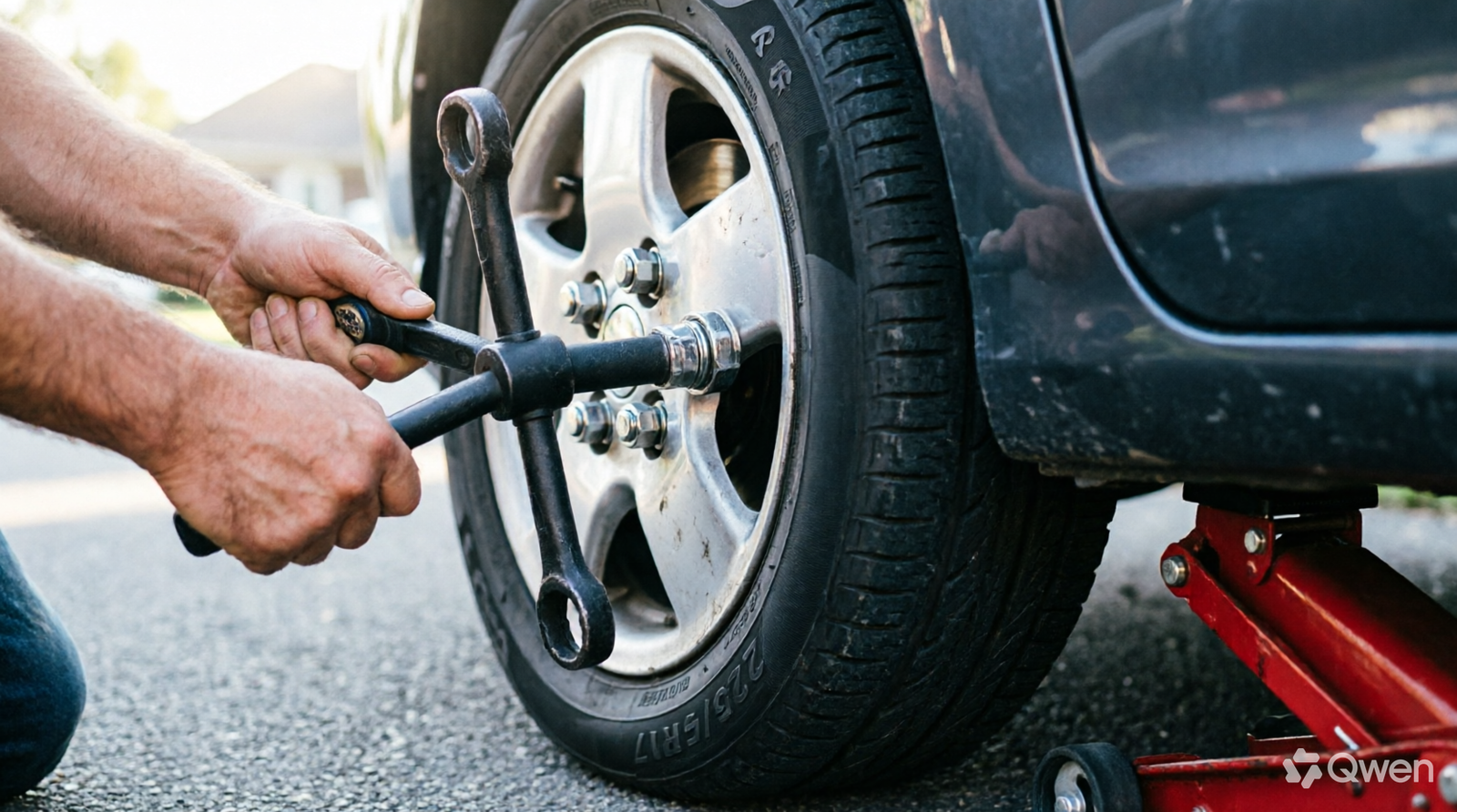
Flat tire, tire rotation, or a wheel swap — at some point, most drivers need to know how to take a tire off a car. The good news is that removing a wheel isn’t complicated once you understand the steps, the right tools, and a few safety basics. This guide walks you through the entire process, from gathering equipment to safely lowering the vehicle again.
If you’re ever on a busy road or highway, don’t attempt the job where you’re exposed to traffic. Call roadside assistance instead and save the DIY approach for a safer spot.
Wheel Removal vs. Tire Removal: What’s the Difference?
Before grabbing a wrench, it helps to know that “taking a tire off” can mean two very different jobs.
The first — and far more common — meaning is removing the entire wheel and tire assembly from the car. This is what you do when changing a flat or rotating tires. It only requires a jack and a lug wrench.
The second meaning is separating the rubber tire from the metal wheel (rim) itself. That’s a specialized job that typically requires a tire-changing machine, not something most people do in a driveway.
| Job | What You’re Removing | Typical Equipment |
| Remove a wheel | Wheel and tire together | Jack and lug wrench |
| Change a spare | Flat wheel and tire | Jack, lug wrench, spare |
| Remove tire from rim | Rubber tire from wheel | Tire machine, specialized tools |
| Rotate tires | Wheels from several positions | Jack and proper equipment |
For nearly everyone reading this, “taking a tire off” means the first scenario — removing the wheel and tire together. That’s the process this guide focuses on.
Tools You’ll Need
Most vehicles that come with a spare tire also include the basic tools required to change it. Before you start, gather:
- Vehicle jack
- Lug wrench
- Spare tire (if you’re replacing the wheel)
- Wheel chocks, when appropriate
- Gloves
- Flashlight, if visibility is limited
- Owner’s manual
A torque wrench isn’t strictly required, but it’s worth having on hand for reinstalling the wheel, since lug nuts need to be tightened to a specific torque spec.
Take a minute to inspect your equipment before you begin. A damaged jack or a missing lug wrench can turn a five-minute job into a frustrating one. It’s also smart to confirm your car actually has a spare — some newer vehicles come with a tire repair kit instead.
How to Prepare Before Removing the Tire
Preparation matters just as much as the removal steps themselves.
If you’re practicing at home, pick a flat, firm surface like a driveway or garage floor. Skip soft or sloped ground, where a jack can become unstable.
If you’re dealing with a flat tire on the road, your first priority is getting the car somewhere safe — not starting the repair. Once you’re parked safely:
- Shift into Park (or engage the parking brake for manual transmissions)
- Apply the parking brake
- Turn off the engine
- Keep passengers away from the work area
- Use your vehicle’s hazard lights and any recommended safety equipment
- Locate the correct jack point using your owner’s manual
Never crawl underneath a vehicle that’s supported only by a jack.
How to Take a Tire Off a Car, Step by Step
Once you’ve parked safely and gathered your tools, here’s the actual process.
Step 1: Loosen the Lug Nuts
Before lifting the car, loosen each lug nut slightly while the wheel is still on the ground. This is easier because the tire won’t spin freely while you apply pressure. Use steady, controlled force rather than sudden jerks, and don’t remove the nuts completely yet.
If a lug nut is stripped or won’t budge, stop forcing it with the wrong tools — that’s a job for a professional.
Step 2: Position the Jack
Check your owner’s manual for the manufacturer’s recommended jack point, then place the jack exactly there. Using the wrong spot can dent the frame or make the car unstable once it’s raised.
Step 3: Raise the Vehicle
Lift the car slowly until the tire clears the ground by an inch or two. Keep hands and feet clear of areas that could get pinned if the vehicle shifts. Remember: a jack lifts the car for quick maintenance — it’s not a substitute for proper stands if you need to work underneath.
Step 4: Remove the Lug Nuts
With the tire off the ground, finish unscrewing the lug nuts you loosened earlier. Set them somewhere secure, like a small container or a magnetic tray, so they don’t roll under the car or get lost in the grass.
Step 5: Pull the Wheel Off
Grip the wheel firmly and pull it straight toward you, off the hub. Some wheels slide off easily; others resist because of rust or corrosion buildup. If it won’t budge with reasonable effort, don’t force it — call for help instead.
What to Do Once the Wheel Is Off
Before installing another wheel, take a quick look at what you’re working with.
If you removed the wheel because of a flat, inspect the tire itself. A small puncture in the tread might be repairable, while sidewall damage usually means the tire needs to be replaced. Also glance at the hub and surrounding components for anything obviously wrong, like exposed wiring or a cracked rotor.
If this was routine maintenance rather than an emergency, set the wheel somewhere stable where it won’t roll away or get scratched.
Whichever wheel you’re installing next, double-check that it’s the correct size and bolt pattern for your vehicle.
Troubleshooting: When the Wheel Won’t Budge
Why Won’t the Wheel Come Off?
Occasionally, all the lug nuts come out, but the wheel itself stays stuck to the hub. This usually happens because of corrosion binding the two surfaces together — a common issue in colder, wetter climates where road salt speeds up rust.
This can be frustrating, especially for a first-timer. Resist the urge to crawl under the car or improvise with unsafe tools to knock it loose. If you have the right equipment and experience, you can follow the manufacturer’s recommended release method (often involves carefully tapping the wheel at specific points). Otherwise, this is a good moment to call a mechanic — a stuck wheel on a raised vehicle can require more force than it’s safe to apply on your own.
Can You Take a Tire Off Without a Jack?
Realistically, no — not for a standard wheel change. The car needs to be lifted so the wheel can clear the ground, and a jack (or a professional lift) is the only safe way to do that.
If your jack is missing or damaged, don’t improvise with stacked wood, cinder blocks, or other unstable supports. It’s not worth the risk. Call roadside assistance or a tow service instead.
Taking a Tire Off the Rim: A Different Job Entirely
It’s worth repeating this distinction because it trips up a lot of beginners. Removing a wheel from your car is a driveway-level task. Removing the rubber tire from the metal rim is not.
Tire shops use a machine that breaks the “bead” — the seal between tire and rim — without damaging either part. Trying to replicate that with hand tools usually ends up bending the rim, tearing the tire, or both. If your goal is actually replacing the tire itself (not just swapping wheels), take it to a shop.
Common Mistakes to Avoid
Even a simple wheel removal can go sideways if you rush. Watch out for these common errors:
- Using the wrong jack point — always confirm the spot in your owner’s manual rather than guessing.
- Removing lug nuts too early — loosen them while the wheel is still grounded, not after lifting the car.
- Setting the jack on unstable ground — soft dirt or a slope can cause the jack to slip.
- Getting underneath the car — never do this when the vehicle is supported only by a jack.
- Losing lug nuts — keep them contained so you’re not searching the ground later.
- Forgetting spare tire limits — many spares are rated for lower speeds and shorter distances than a full-size tire.
- Working too close to traffic — if your location feels unsafe, wait for roadside assistance.
Putting the Wheel Back On
Reinstalling the wheel correctly matters just as much as taking it off. Line the wheel up on the hub, then thread the lug nuts on by hand. Tighten them a little at a time in a star pattern rather than fully tightening one before moving to the next — this keeps the wheel seated evenly.
Once the car is back on the ground, give the lug nuts a final tighten to the torque spec listed in your owner’s manual. Before driving off, confirm:
- The wheel is seated flush against the hub
- All lug nuts are installed and tightened
- Tire pressure is appropriate
- You understand any speed or distance limits if you’re running a temporary spare
If anything feels off, have the wheel checked by a professional before driving.
When to Call a Professional Instead
Knowing how to take a tire off is a useful skill, but it’s not always the right move to handle it solo. Get help if:
- You’re stopped somewhere dangerous, like a highway shoulder
- The ground is unstable or sloped
- Your jack is missing, damaged, or the wrong type
- Lug nuts are stripped or won’t loosen
- The wheel is severely stuck to the hub
- You’re unsure of your vehicle’s correct jack point
- Your spare tire is damaged or missing
There’s no shame in calling for backup, especially for new drivers still learning the basics.
Staying Prepared for Next Time
A little upkeep now can save you a headache later.
- Check your equipment periodically. Make sure your jack and lug wrench are actually in the trunk and in working condition.
- Inspect your spare tire. A spare that’s sat unused for years may be underinflated or dry-rotted.
- Know your jack points ahead of time. Don’t wait until an emergency to open the manual for the first time.
- Keep the owner’s manual accessible. It has your torque specs, tire pressure numbers, and spare tire limitations.
- Practice in a low-stakes setting. If you’re new to this, run through the process in your driveway with an experienced friend or family member before you actually need to.
Frequently Asked Questions
Is it hard to take a tire off a car?
Not usually — with the right tools and a safe, flat surface, most drivers can remove a wheel without much trouble. Difficulty varies slightly by vehicle.
What tools do I need to take a tire off?
A jack to lift the car and a lug wrench to remove the nuts. Most vehicles include both in a factory emergency kit.
Should I loosen the lug nuts before or after jacking up the car?
Loosen them slightly while the wheel is still on the ground, then finish removing them once the car is raised.
Why is my wheel stuck even after removing the lug nuts?
Corrosion between the wheel and hub is the usual culprit. If it won’t come free safely, a mechanic can help.
Can I take a tire off without lifting the car?
No — the wheel needs clearance from the ground, which means you’ll need a jack or a professional lift.
Is removing a tire from the rim the same as removing a wheel?
No. Removing a wheel takes the whole assembly off the car. Removing the tire from the rim requires specialized shop equipment.
Is it safe to change a tire on the highway shoulder?
It’s risky if you’re exposed to moving traffic. Move to a safer spot when possible, or call roadside assistance.
Final Takeaway
Taking a tire off a car is a manageable skill once you know the steps: loosen, lift, remove, and reinstall — all with the right tools and a safe location. If anything feels stuck, unstable, or unsafe along the way, it’s always worth calling in professional help rather than pushing through on your own.