

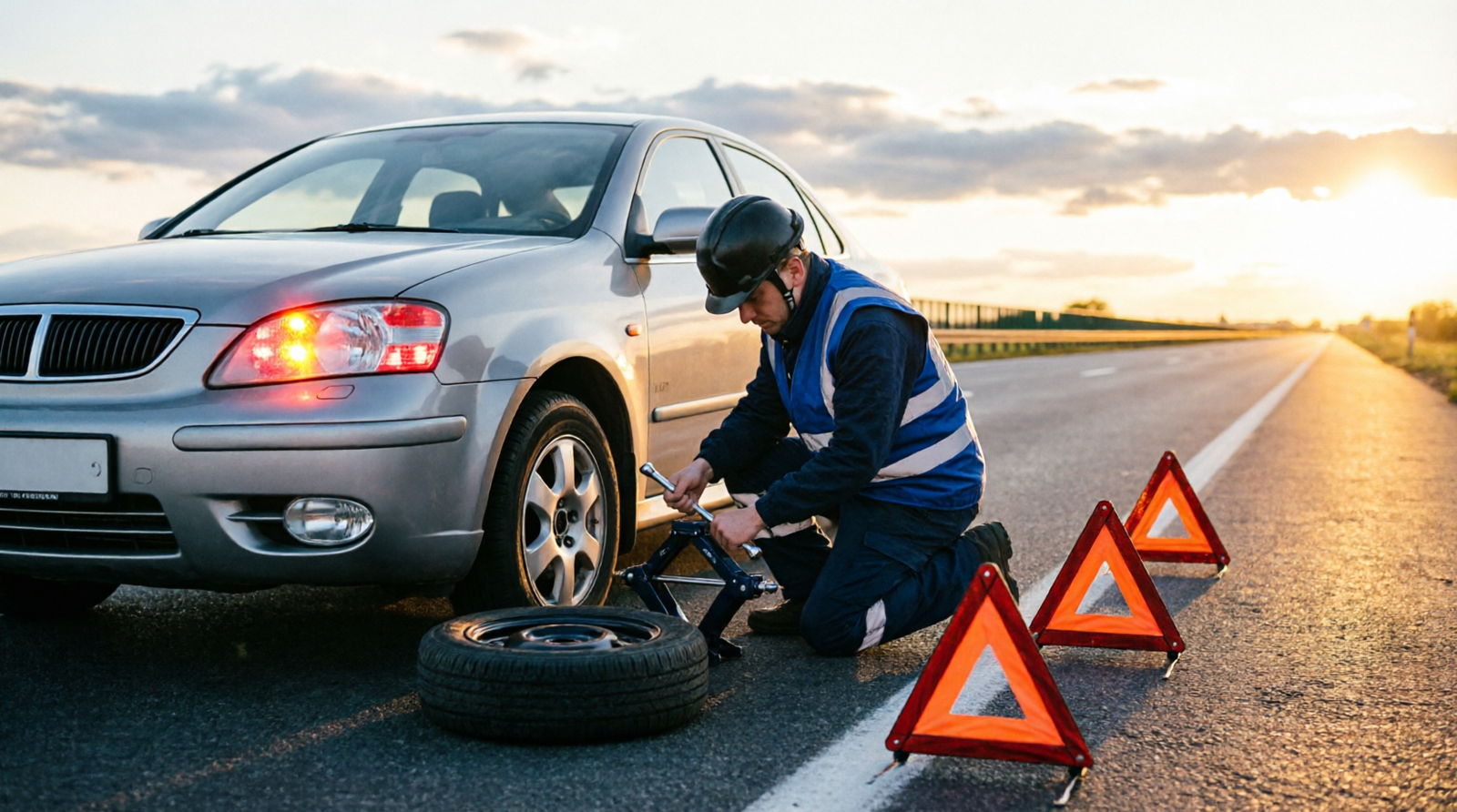
A flat tire can turn an ordinary drive into a stressful situation, especially on a busy highway, in bad weather, or far from a repair shop. The good news: a roadside assistance tire change can get you moving again without you having to touch a lug wrench yourself. Here’s exactly how the service works, what it covers, and what to do while you wait.
What Is a Roadside Assistance Tire Change?
A roadside assistance tire change sends a trained technician to your vehicle when you have a flat or damaged tire, so they can swap it out for your spare on the spot.
Instead of limping to a repair shop on a flat, you request help at your current location. The technician brings the tools and handles the swap, which typically includes:
- Assessing the flat or damaged tire
- Safely positioning the vehicle for the change
- Removing the damaged wheel
- Installing the spare tire
- Tightening the lug nuts
- Confirming the replacement wheel is properly secured
One important distinction: roadside assistance generally doesn’t repair or permanently replace the damaged tire. The spare is often a short-term fix, especially if your vehicle uses a compact “donut” spare. If you don’t have a usable spare, ask the provider what else is available — you may need mobile tire repair, tire replacement, or a tow to a shop.
When Should You Call for Roadside Tire Assistance?
Not every flat needs a service call, but plenty of situations genuinely do. Consider calling when:
- Your tire is completely flat
- You have a damaged sidewall
- The tire has come off the wheel or won’t hold air
- You don’t know how to install the spare
- You lack a jack or lug wrench
- Your vehicle is stopped somewhere unsafe
- Weather or traffic makes a DIY change risky
- It’s dark and you can’t safely work beside the vehicle
The golden rule: don’t drive on a flat unless your vehicle or tire manufacturer explicitly says it’s safe to do so. Even a short distance can damage the wheel or create a dangerous situation. And if your car is stuck somewhere hazardous, get yourself and your passengers to safety first — the tire can wait.
How Does a Roadside Assistance Tire Change Work?
The process is fairly consistent across providers, even though the details vary slightly.
1. Request Assistance
Call your provider or use their app. You’ll typically need to share:
- Vehicle make and model
- License plate information
- Exact location
- Description of the problem
- Whether you have a spare tire
2. Wait in a Safe Spot
Once help is on the way, follow the dispatcher’s safety instructions — and speak up immediately if your vehicle is in a dangerous position.
3. Technician Inspects the Vehicle
The technician checks whether your spare is usable. If it isn’t, they’ll walk you through other options your plan covers.
4. Spare Tire Goes On
Using the right equipment, the technician removes the damaged wheel and installs the spare.
5. You Head to a Suitable Destination
If it’s a temporary spare, stick to the speed and distance limits printed on the tire or listed in your owner’s manual, and get the damaged tire repaired or replaced as soon as you reasonably can.
What Should You Have in Your Vehicle?
Roadside help is useful, but a little preparation goes a long way. Here’s what’s worth keeping on hand:
| Item | Why It Matters |
| Spare tire | Provides a replacement wheel when compatible |
| Jack | Lifts the vehicle for a tire change |
| Lug wrench | Removes and tightens lug nuts |
| Owner’s manual | Gives vehicle-specific instructions |
| Tire pressure gauge | Checks the spare’s pressure |
| Flashlight | Helps during nighttime emergencies |
| Reflective warning equipment | Improves visibility around a stopped vehicle |
Not every car comes with a traditional spare — some newer models rely on tire repair kits or run-flat tires instead. Check your vehicle before an emergency hits, so you know whether you have a spare, where it’s stored, and whether it’s properly inflated.
Does Roadside Assistance Cover a Tire Change?
Coverage depends entirely on your plan. Some include tire changes as a standard benefit; others cap the number of service calls or add fees depending on the circumstances.
Before assuming you’re covered, check for:
- Tire-change coverage specifically
- Service-call limits
- Membership requirements
- Extra mileage or location charges
- Coverage for the vehicle you’re driving
- Whether a spare tire is required
- Towing options if no spare is available
Roadside coverage is often separate from your regular auto insurance — some insurers offer it as an add-on, while automakers and auto clubs sell their own plans. If you’re unsure what you have, call your provider before you actually need them.
How Much Does a Roadside Assistance Tire Change Cost?
Costs vary a lot depending on how you access the service.
| Situation | Possible Cost Structure |
| Included roadside plan | Often covered within plan limits |
| Insurance roadside coverage | Depends on policy |
| Auto club membership | Usually included under membership terms |
| Pay-per-use roadside service | Service fee typically applies |
| No spare tire | Additional repair or towing costs may apply |
These are general categories, not fixed prices — local rates differ, so ask for the total expected charge before authorizing a pay-per-use call. Also note that the tire-change service itself usually doesn’t cover the cost of a new tire; if your damaged one can’t be repaired, you’ll likely buy a replacement separately.
What If You Don’t Have a Spare Tire?
This is increasingly common, since some vehicles skip the spare entirely to save weight or cargo space. If that’s you, tell the provider right away — a technician may not be able to do a standard tire change without a compatible wheel.
Depending on your coverage, alternatives might include:
- Mobile tire repair
- Mobile tire replacement
- Towing to a tire shop
- Another approved temporary fix
Don’t assume every puncture is fixable with a basic repair kit. Sidewall damage or serious structural issues can make a tire unsafe to patch. When in doubt, your owner’s manual and the tire manufacturer’s guidance should be the deciding factor.
Roadside Tire Change vs. Mobile Tire Replacement
These sound similar but solve different problems.
A roadside tire change installs the spare you already have in your vehicle. Mobile tire replacement brings a brand-new tire to your location and installs it directly.
Roadside tire change works best when:
- You have a compatible spare
- You need immediate help
- A temporary fix is enough
Mobile tire replacement works best when:
- You don’t have a usable spare
- The damaged tire needs permanent replacement
- The provider can supply the correct tire on-site
Remember that a spare is usually meant to be temporary — check your owner’s manual for restrictions and plan a permanent fix soon after.
How to Choose a Roadside Assistance Provider
If you’re comparing plans, look past the advertised price and dig into what’s actually included.
- Check tire-change coverage. Don’t assume every plan includes it.
- Look at service limits. Some cap how many calls you can make per year.
- Check towing benefits. A solid plan offers alternatives when a tire can’t be changed on-site.
- Understand extra fees. Ask about mileage, remote locations, or after-hours charges.
- Consider availability. Coverage only helps if it’s available where and when you need it.
- Read the fine print on vehicles. Some plans have rules about which vehicles qualify or whether you must supply your own spare.
A few minutes of comparison now can save real frustration later.
Common Mistakes to Avoid During a Flat-Tire Emergency
Flat tires tend to trigger rushed decisions. Watch out for these:
- Driving too far on a flat — this can damage the wheel and create safety risks
- Changing a tire in traffic — call for help instead if the spot feels unsafe
- Using the wrong spare — it must be compatible, not just physically fit
- Ignoring spare-tire limits — temporary spares have speed and distance restrictions
- Skipping the pressure check — a spare that’s sat unused for months may be underinflated
- Assuming every tire is repairable — some damage requires full replacement
- Driving off without checking — make sure the wheel is secure and equipment is stowed
Conclusion
A flat tire doesn’t have to ruin your day. Roadside assistance can turn it into a quick, manageable fix instead of a roadside repair job. Know what your plan covers, check whether you actually have a spare, and keep basic emergency gear in the car. When a flat happens, prioritize safety, share your exact location, and let the technician take it from there.
FAQs About Roadside Assistance Tire Change
1. Does roadside assistance change flat tires?
Many plans include tire changes, but coverage varies by provider. Check your membership or policy to confirm.
2. Will roadside assistance bring a new tire?
Usually not — standard service installs your existing spare. Some providers offer mobile tire replacement as a separate service.
3. What if I don’t have a spare tire?
Tell the provider when you call. Depending on coverage, they may offer mobile repair, replacement, or towing instead.
4. Can I drive on a flat tire to a shop?
Generally no, unless your vehicle or tire manufacturer specifically says limited driving is safe.
5. How long does a roadside tire change take?
The swap itself is quick, but total wait time depends on technician availability, traffic, and weather.
6. Does roadside assistance cover the cost of a new tire?
Typically it covers the service call, not the tire itself. Check your plan for exact benefits.
7. Is a spare tire safe for normal driving?
Temporary spares are meant for limited use — follow the speed and distance limits set by your vehicle or tire manufacturer.