

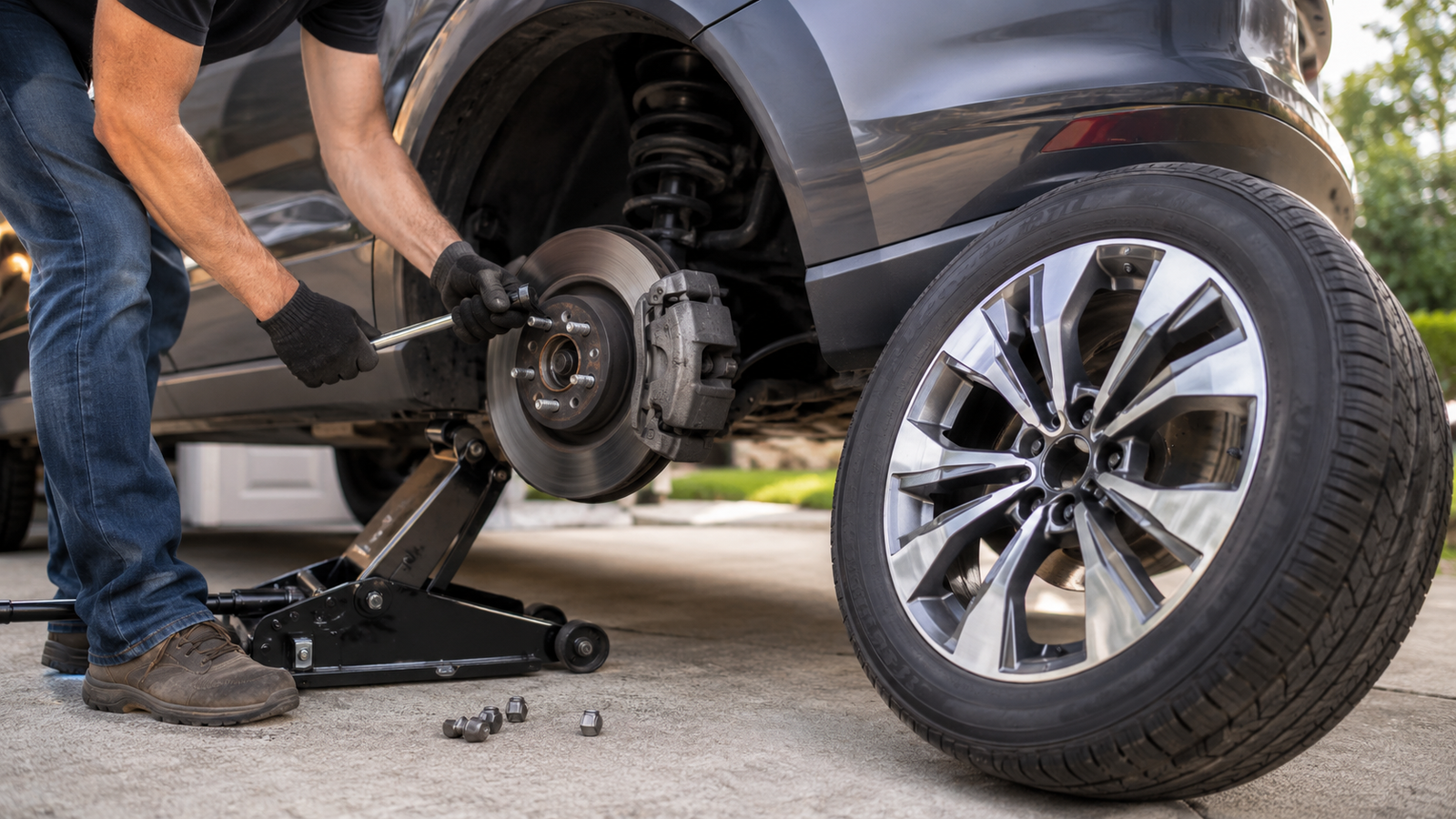
A flat tire, a routine rotation, or a brake job all start with the same question: how do you get the wheel off? It seems simple until a lug nut won’t turn or the wheel feels welded to the hub. Removing a wheel and tire assembly is a manageable DIY job with the right tools. Separating the rubber tire from the metal rim is a different task entirely, calling for more caution and better equipment. Here’s how to handle both, plus what to do when things don’t go as planned.
What Does “Getting a Tire Off” Mean?
“Removing a tire” can mean two different jobs, and mixing them up is where a lot of confusion starts.
The first is taking the wheel and tire assembly off the vehicle. This is what you’re doing any time you swap in a spare, rotate your tires, or need access to the brakes.
The second is separating the rubber tire from the wheel itself, often called demounting. This job normally needs a tire machine and specialized tools that most driveways simply don’t have.
| Job | What Comes Off | Typical Difficulty |
| Remove wheel from car | Wheel and tire together | Beginner to intermediate |
| Change a flat | Flat wheel/tire, install spare | Beginner |
| Remove tire from rim | Rubber tire only | Advanced |
| Replace a tire | Old tire removed, new one mounted | Professional job |
For most drivers, it’s the first scenario that applies. If your goal is actually pulling the tire off its rim, don’t approach it like a roadside tire change. Michelin recommends that tire mounting and demounting be handled by trained professionals using proper equipment, largely because an inflated tire stores real energy and can be dangerous if handled the wrong way.
Tools You Need to Remove a Tire From Your Car
Gather everything before you touch the jack — working without the right gear is the fastest way to turn a ten-minute job into an hour-long one.
For a standard wheel removal, plan on having:
- A lug wrench or the correctly sized socket and ratchet
- A vehicle jack rated for your car’s weight
- Wheel chocks
- Work gloves
- A flashlight, if you’re working in dim light
- Jack stands, if the car needs to stay raised for any length of time
- A torque wrench for putting the wheel back on correctly
Pull out your owner’s manual before you begin. Jacking points, lug nut torque specs, and even the recommended procedure can differ quite a bit between vehicles.
A Few Extras Worth Having
Penetrating lubricant can help loosen a corroded or stuck fastener, but treat it as a backup, not a replacement for the correct socket and steady technique.
A rubber mallet is also worth keeping in the trunk. It’s the safer choice for freeing a wheel that’s stuck to the hub — a steel hammer risks denting the wheel or damaging nearby parts.
How to Get a Tire Off a Car Step by Step
Removing a full wheel and tire assembly follows a consistent process. Take it one step at a time.
1. Find a Safe, Level Location
Pull onto a firm, level surface, away from traffic. If you’re dealing with a roadside issue, put your hazards on right away.
Shift into Park for an automatic transmission, or into gear with the parking brake set for a manual. Avoid changing a tire on soft ground or a steep slope if there’s any way to reach a safer spot first.
NHTSA guidance warns that a vehicle can slip off a jack, and drivers should never put any part of their body underneath a car that’s supported only by a jack.
2. Secure the Vehicle
Shut off the engine and set the parking brake.
Place wheel chocks against the tires that will stay on the ground, front or back, to stop the car from rolling. If you have passengers, have them step out before you lift the vehicle.
3. Loosen the Lug Nuts First
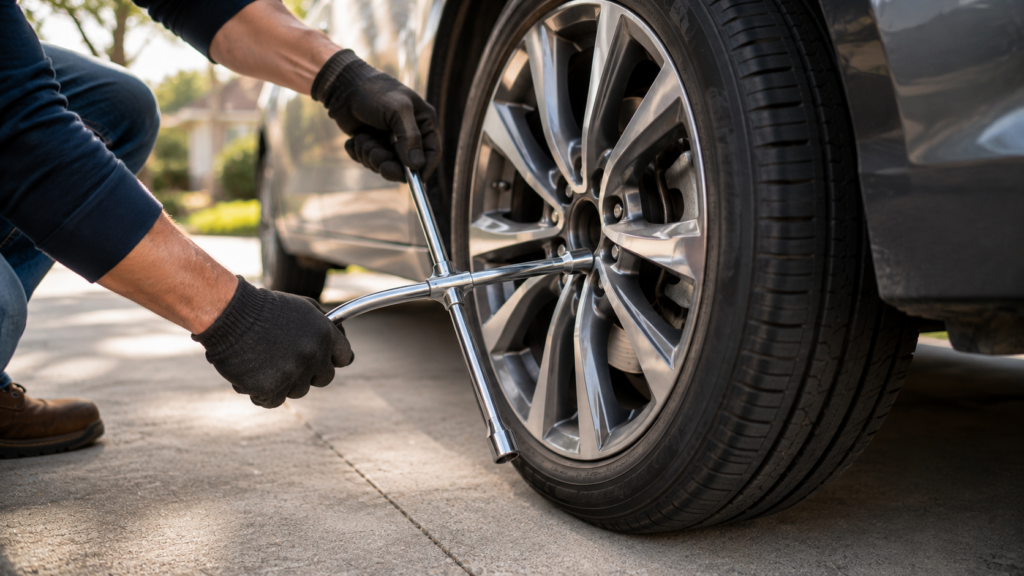
Do this while the tire is still on the ground — it’s one of the most important steps in the whole process.
Use your lug wrench to break each lug nut loose, turning it just enough to know it’s no longer torqued down. Don’t remove them completely yet. With the wheel still touching the ground, you get far better leverage, and the wheel won’t spin on you while you work.
If a nut refuses to budge, double-check that you’re using the right socket size and that the wrench is fully seated before pushing harder.
4. Find the Correct Jack Point
Check your owner’s manual for the manufacturer’s designated jacking point rather than guessing.
Don’t set the jack under the rocker panel, a body seam, or a suspension part just because it looks sturdy — these areas aren’t designed to bear the vehicle’s weight and can bend or crack. NHTSA materials likewise stress using the specified jack points on a firm, level surface.
5. Raise the Vehicle
Slot the jack into the correct spot and raise the car slowly until the tire clears the ground by a couple of inches — you don’t need much more than that.
Never slide underneath a vehicle that’s supported only by its factory jack. If you need to get under the car for any reason, transfer the weight onto properly rated jack stands first.
6. Take Off the Lug Nuts
With the wheel now off the ground, finish removing the lug nuts you loosened earlier.
Set them aside somewhere clean so they don’t roll off or pick up grit. Note that some vehicles use wheel bolts instead of lug nuts, which come out a bit differently — your owner’s manual will walk you through it.
7. Pull the Wheel Straight Off
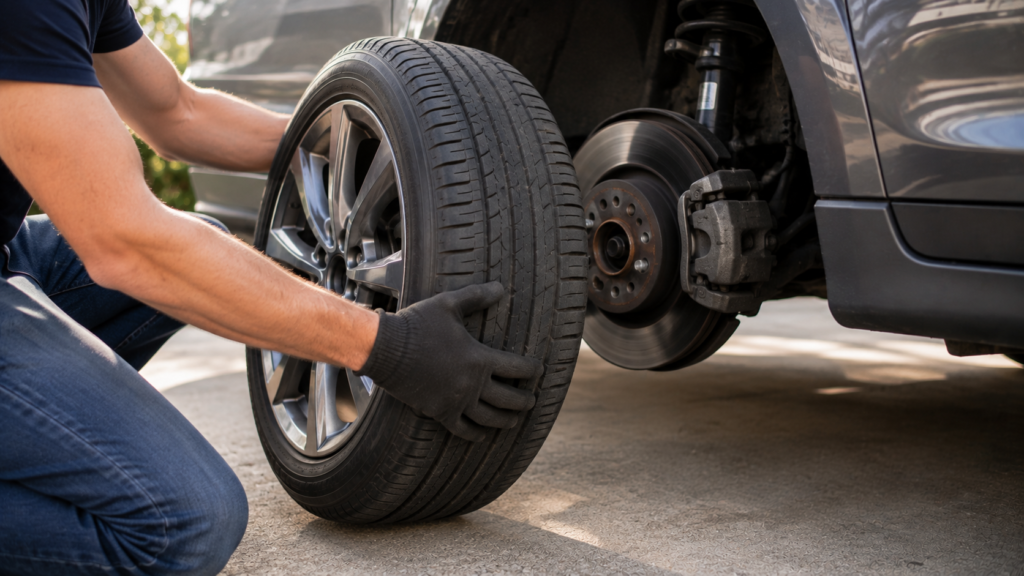
Grip the wheel with both hands and pull it straight toward you, keeping your stance steady.
Wheel and tire assemblies are heavier than they look, especially on trucks and SUVs, so brace yourself. Once it’s free, roll it away from the car and lay it flat somewhere it won’t roll into traffic.
What to Do When the Tire Won’t Come Off
Every lug nut is out, but the wheel still won’t budge. This usually comes down to corrosion bonding the wheel to the hub — common in areas with road salt or long winters.
Try a Controlled Loosening Method
Double-check first that every lug nut or wheel bolt is actually removed.
From there, try gently tapping the back of the tire with a rubber mallet, working around the circumference rather than hammering one spot. Another option is threading two lug nuts back on loosely and rocking the wheel by hand — this can break the corrosion’s grip without letting the wheel drop unexpectedly.
Whatever you do, don’t drive around with loose lug nuts hoping the motion frees the wheel. It’s not worth the risk. If the wheel is still stuck after a reasonable effort, it’s time to call in help.
How to Remove a Tire From the Rim
Taking the tire off the rim is a completely different process from removing the wheel from the car.
The tire’s bead — the reinforced inner edge that seals against the wheel — grips the rim tightly by design. That seal has to be broken before the tire will come free.
The general process looks like this:
- Fully deflate the tire.
- Remove the valve core, if needed.
- Break the bead loose from the rim.
- Apply an approved tire mounting lubricant.
- Work the bead over the rim with tire irons or a tire machine.
- Lift the tire off the wheel.
The tire should never be dismounted while it’s still inflated. Michelin’s tire service guidance is explicit that the tire must be completely deflated before it’s removed from the wheel.
Why This Job Is Riskier
A tire’s bead is heavily reinforced, and an inflated tire holds a surprising amount of stored energy. Get the bead removal wrong or use the wrong tool, and the results can be genuinely dangerous.
That’s exactly why tire shops invest in machines built specifically for mounting and demounting — and why Michelin recommends leaving this part of the job to trained professionals.
What Not to Do When Removing a Tire
A few shortcuts show up again and again, and they’re worth avoiding.
Don’t Work Under a Jacked-Up Vehicle
A jack lifts the car; it doesn’t hold it safely in place on its own. Never put any part of your body under a vehicle that’s supported only by a jack.
Don’t Remove an Inflated Tire From the Rim
Never try to break the bead or pry an inflated tire off the wheel. Full deflation comes first, every time.
Don’t Reach for Random Tools
Screwdrivers, pry bars, and similar improvised tools can gouge the bead or scratch the wheel. Damage that’s invisible now can turn into a real problem once the tire is reinflated.
Don’t Ignore a Damaged Wheel
A bent, cracked, or heavily corroded wheel needs a look before a new tire goes on it. A compromised wheel can cause sealing issues, vibration, or fitment problems down the road.
Don’t Guess on Lug Nut Torque
Tighten lug nuts to the exact torque spec listed by your vehicle’s manufacturer. Tire Rack echoes this advice, recommending drivers follow the manufacturer’s torque specifications rather than estimating “tight enough” by feel.
How to Get a Stuck Tire Off Without Damaging It
If the wheel is still stuck once every fastener is out, patience beats brute force.
Start by confirming, again, that nothing was missed — some vehicles use locking lug nuts or unusual fastener layouts that are easy to overlook.
Next, take a look at the hub and the wheel’s contact surface for visible rust or corrosion. A rubber mallet, used carefully and moved around the wheel rather than focused on one spot, is usually enough to break a moderately stuck wheel free.
Once it comes loose, clean off any loose rust or debris from the hub and mounting surface before putting anything back on. Skip the torch or any open flame near the tire — that’s a job for someone trained to work around wheel and tire assemblies, not a DIY fix.
When Should You Call a Professional?
Plenty of tire jobs are perfectly reasonable to do yourself. Others aren’t.
You can typically handle a standard wheel removal with the right tools, a safe spot to work, and your owner’s manual close by. Bring in a professional instead when:
- The wheel is severely stuck and won’t budge with careful effort
- A lug nut is stripped, rounded off, or damaged
- The wheel or tire looks visibly damaged
- You need to separate the tire from the rim
- You’re mounting a new tire
- You’re working with a large truck, specialty tire, or unusual wheel setup
- You don’t have a safe way to lift and support the vehicle
- You’re stuck on the shoulder of a busy road
A properly equipped tire shop can do this work faster and more safely than a driveway setup, and a botched DIY attempt at mounting or demounting can damage the bead or wheel, or create a dangerous situation once reinflated.
What to Check Before Putting the Tire Back On
Getting the wheel off is only half the job. Before it goes back on, take a minute to look it over.
Check for:
- Cracks or bends in the wheel
- Heavy corrosion
- Damaged studs or wheel bolts
- Worn or damaged lug nuts
- Debris caught between the wheel and hub
- Obvious tire damage or embedded objects
- Uneven tread wear
Wipe down the mating surfaces so the wheel sits flush against the hub. Hand-start every lug nut or bolt to avoid cross-threading, tighten them in the sequence your manufacturer recommends, and finish with a torque wrench set to spec. Once the car is back on the ground, do a final torque check and confirm your tire pressure before you drive off.
How Long Does It Take to Get a Tire Off?
For someone with experience and the right tools, a full wheel removal usually takes just a few minutes. First-timers should expect it to run longer, since finding the jack point, working through the lug nuts, and positioning the vehicle safely all take a bit more care the first time around.
| Task | Typical DIY Time |
| Remove wheel and tire assembly | 10–20 minutes |
| Change a flat with a spare | 15–30 minutes |
| Free a lightly stuck wheel | Add extra time |
| Remove tire from rim | Best left to a shop with tire equipment |
These are ballpark figures. Corrosion, wheel design, your tools, and your experience level can all shift the numbers in either direction.
Frequently Asked Questions
Can I remove a tire myself?
Yes — removing the wheel and tire assembly from your car is a reasonable DIY task with basic tools. Separating the tire from the rim is a different, more specialized job.
Why won’t my tire come off after I’ve removed the lug nuts?
It’s usually corrosion bonding the wheel to the hub. Confirm every fastener is out, then work the wheel loose carefully with a rubber mallet.
Do I need to deflate a tire before taking it off the rim?
Yes, completely. A tire should never be dismounted while it’s still inflated.
Can I use a screwdriver to pry a tire off a rim?
It’s not a good idea — improvised tools like screwdrivers can damage the bead or the wheel. Proper tire irons or shop equipment are the safer route.
Do I need jack stands for a simple tire change?
Follow your owner’s manual for a quick change, but never put any part of your body underneath a vehicle held up only by a jack.
How do I get a rusted wheel off my car?
Once every fastener is confirmed removed, gently work the wheel free with a rubber mallet. Severe corrosion may call for professional help.
What should I do right after putting the wheel back on?
Torque the lug nuts to your manufacturer’s spec, confirm the wheel is seated properly, and check your tire pressure before driving.
Conclusion
Knowing how to get a tire off comes in handy for flat-tire emergencies, routine rotations, and brake jobs alike. The process itself isn’t complicated: secure the vehicle, loosen the lug nuts before lifting, raise the car at the correct jack point, then pull the wheel free. Just remember the key distinction — taking the wheel off the car is a job most drivers can manage, while separating the tire from the rim is better left to a shop with the right equipment on hand.